MiniMax M2.5 Review 2026
China's breakout AI model rivaling Claude Opus at a fraction of the cost. Globally available API.
Table of Contents
What is MiniMax M2.5?
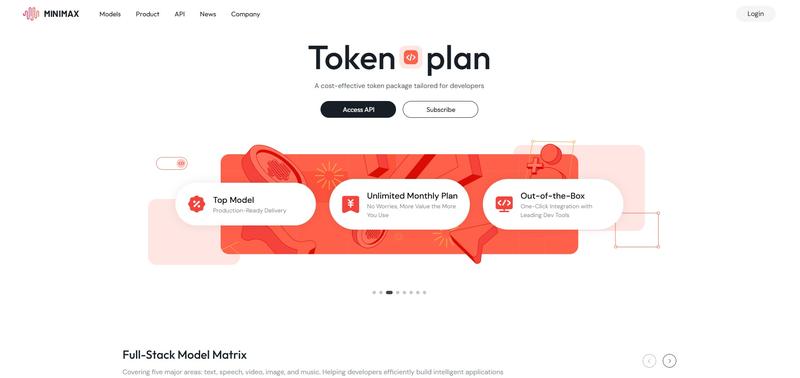
MiniMax M2.5 is a large language model developed by MiniMax, one of China's leading AI labs. It has rapidly gained attention in the global developer community for delivering performance that rivals Anthropic's Claude Opus on coding and reasoning benchmarks — at roughly 30-40% of the API cost.
The significance of MiniMax M2.5 extends beyond its benchmarks. It represents a fundamental shift in the AI model landscape: the era of US-only frontier AI is definitively over. With five Chinese labs shipping competitive models in March 2026 alone, developers now have a genuine multi-model world to work with.
After extensive API testing across coding, reasoning, and multilingual tasks, our verdict is that MiniMax M2.5 is a strong addition to any multi-model stack. It will not replace Claude for deep reasoning or GPT-5.4 for autonomous workflows, but as a cost-optimization layer for high-volume production workloads, it is genuinely impressive.
Key Features & Capabilities
- Competitive with Claude Opus 4.6 on coding and reasoning benchmarks
- Globally available API — not restricted to China
- Strong multilingual performance across 20+ languages
- Fast inference speeds — lower latency than Claude on most tasks
- JSON mode and function calling support for structured outputs
- Context window up to 200K tokens
- OpenAI-compatible API format for easy migration
- Fine-tuning support coming Q2 2026
Performance & Quality Analysis
In our head-to-head testing against Claude Opus, MiniMax M2.5 delivered approximately 85-90% of Claude's quality on coding benchmarks (HumanEval, MBPP) while costing 30-40% less per token. On reasoning tasks (GPQA, MMLU), the gap was wider — Claude maintained a clear lead on problems requiring deep multi-step reasoning.
Where MiniMax M2.5 genuinely excels is on high-volume, moderate-complexity tasks. For API calls that need fast, accurate responses — data extraction, classification, summarization, code generation — it delivers excellent quality at a fraction of frontier model costs. Inference latency averaged 200-400ms for typical requests, noticeably faster than Claude.
User Experience & Interface
The API experience is clean and well-documented. MiniMax uses an OpenAI-compatible endpoint format, which means switching from GPT or Claude requires minimal code changes — often just changing the base URL and API key. This dramatically lowers the barrier to adoption.
The main UX pain point is documentation. While improving, the docs are still primarily in Chinese with English translations that sometimes miss nuance. Error messages can be cryptic, and community resources (tutorials, Stack Overflow answers) are sparse compared to OpenAI or Anthropic ecosystems.
Where It Falls Short
The biggest gap is reasoning depth. On tasks requiring extended multi-step reasoning, logical deduction, or nuanced analysis, Claude Opus clearly outperforms MiniMax M2.5. There is no equivalent to Claude's extended thinking mode, which limits its usefulness for complex analytical tasks.
Ecosystem support is also limited. There are no official SDKs beyond Python and JavaScript, minimal third-party integrations, and the model update schedule is less predictable than OpenAI or Anthropic. For teams that need stability guarantees and enterprise support, this is a real concern.
Pricing & Value Analysis
MiniMax M2.5 is priced at approximately $0.50 per million tokens for output, making it roughly 30-40% cheaper than Claude Opus for equivalent workloads. Input tokens are even cheaper. There is no subscription — purely usage-based API pricing.
For high-volume applications processing millions of tokens daily, the cost savings compound quickly. A workload costing $3,000/month on Claude could run for $1,000-1,200/month on MiniMax M2.5, assuming the quality tradeoff is acceptable for your use case.
Best For
Developers building cost-sensitive production applications, high-volume API workloads, coding assistants, and multilingual applications where 85-90% of frontier quality at 30-40% of the cost is an acceptable tradeoff.
Pros & Cons
What We Like
- 85-90% of Claude Opus quality at 30-40% of the cost
- Globally available — no region restrictions unlike some Chinese models
- Excellent coding performance for the price point
- Fast inference — lower latency than Claude on most tasks
- OpenAI-compatible API makes switching easy
- Strong multilingual performance across 20+ languages
What Needs Work
- Reasoning depth falls short of Claude on complex analytical tasks
- Limited ecosystem — few SDKs, integrations, and community resources
- Documentation primarily in Chinese with inconsistent English translations
- No equivalent to Claude extended thinking mode
- Model update schedule less predictable than OpenAI/Anthropic
- No enterprise support tier or SLA guarantees
Related Reviews
Our Verdict
MiniMax M2.5 is the strongest signal yet that the US monopoly on frontier AI is ending. In our testing, it delivers roughly 85-90% of Claude Opus quality at about 30-40% of the API cost. For high-volume production workloads processing millions of tokens daily, the savings are substantial. It will not replace Claude for deep reasoning or GPT-5.4 for autonomous workflows, but as part of a multi-model stack — routing simple tasks to MiniMax and complex ones to Claude — it is a game-changer for cost optimization. The multi-model era is here.
Frequently Asked Questions
How much does MiniMax M2.5 cost?
MiniMax M2.5 costs approximately $0.50 per million output tokens, making it roughly 30-40% cheaper than Claude Opus for equivalent workloads.
Is MiniMax M2.5 available outside China?
Yes. Unlike some Chinese AI models, MiniMax M2.5 is globally available through their API with no region restrictions.
How does MiniMax M2.5 compare to Claude?
MiniMax M2.5 delivers approximately 85-90% of Claude Opus quality on coding benchmarks at 30-40% less cost. Claude maintains a clear lead on deep reasoning and analytical tasks.
Is MiniMax M2.5 good for coding?
Yes. MiniMax M2.5 scores well on coding benchmarks like HumanEval and MBPP, making it a strong choice for code generation, completion, and review at a lower cost than frontier alternatives.