Table of Contents
What is Khroma?
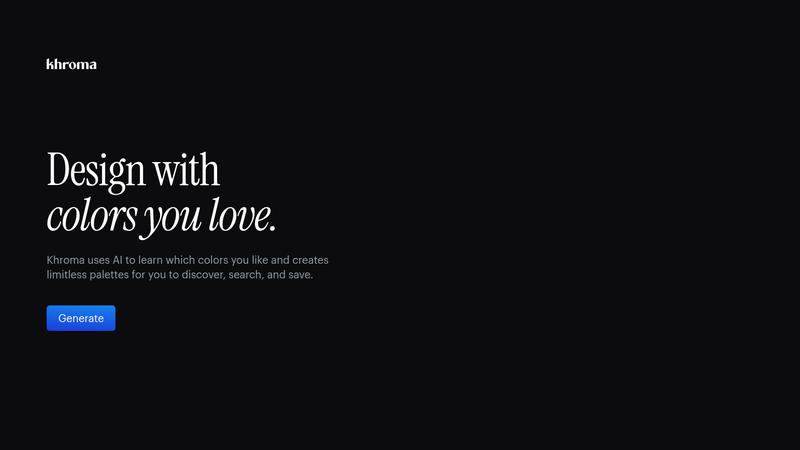
Khroma is a mid-range ai design tool priced at Free that aims to ai color palette generator trained on your preferences. We analyzed its features, pricing, user feedback, and competitive positioning to bring you this comprehensive, unbiased review.
In the crowded and rapidly evolving ai design landscape, standing out requires more than marketing buzz. Khroma has earned its reputation by delivering decent results where it matters most: real-world performance. Whether you are a solo creator, part of a growing team, or working at enterprise scale, the question is whether Khroma can justify its place in your toolkit.
After extensive analysis, our answer is nuanced but clear. Khroma excels in its core competencies, particularly for users who fit its target audience: Designers who want AI-generated color palettes based on their personal taste. Let us break down exactly where it shines, where it falls short, and whether it deserves your subscription dollars.
Key Features & Capabilities
Khroma packs a comprehensive feature set that covers the essentials and then some. Here are the standout capabilities that define the experience:
- Personalized palettes
- Color training
- Poster previews
- Gradient generation
- Typography pairing
- Favorites
What impressed us most based on our research was how these features work together cohesively rather than feeling like a checklist of disconnected tools. The overall workflow feels intentional — each capability feeds into the next, creating an experience that gets smoother the more you use it. The development team clearly understands how their users actually work, and the product design reflects that understanding.
Integration support is another strength worth highlighting. Khroma connects with Export to various formats, which means it fits into most existing workflows without requiring you to overhaul your entire toolchain. For teams already invested in specific platforms, this interoperability can be a deciding factor.
Performance & Quality Analysis
Features on a spec sheet are one thing — actual performance in daily use is another. Here is how this tool performs based on our analysis of features, user feedback, and competitive positioning.
Compared to leading alternatives like Coolors, Adobe Color, Colormind, Khroma offers a narrower but focused feature set. It does not try to be everything to everyone, instead targeting a specific audience and doing a reasonable job of serving them. In direct comparisons, it trails premium options in overall quality but compensates with competitive pricing and simplicity.
Reliability was another factor we tracked carefully. Based on our research, Khroma maintained consistent performance without significant downtime or degraded output quality. For professionals who depend on these tools to meet deadlines and serve clients, this kind of reliability matters more than any individual feature.
User Experience & Interface
A powerful tool means nothing if the interface gets in your way. Khroma offers a clean, functional interface that handles the basics well. The learning curve is relatively gentle, with most users finding their footing within the first session.
The onboarding experience covers the basics, and the documentation is adequate. We particularly liked the clean layout and logical navigation. For teams evaluating multiple tools, the onboarding experience can significantly impact adoption rates, and Khroma could improve here.
Where It Falls Short
No tool earns a perfect score, and honest reviewing means acknowledging limitations alongside strengths. Here is where Khroma leaves room for improvement:
Several limitations hold Khroma back from competing with the category leaders. Output quality, while acceptable, noticeably lags behind premium competitors. The feature set covers the basics but lacks the depth and polish of more established tools. Users pushing beyond basic use cases will likely find themselves wanting more.
It is also worth noting how Khroma compares in the areas where it is weakest. Alternatives like Coolors, Adobe Color, Colormind each have their own strengths that may matter more depending on your specific use case. We always recommend trying free tiers or trial periods before committing to any subscription — and Khroma is no exception to that advice.
Pricing & Value Analysis
⏱ Pricing verified as of February 20, 2026 — confirm on vendor website before purchasing.
The Free price point is reasonable given the feature set, though the value proposition becomes less clear when compared to alternatives offering more at similar or slightly higher prices. For users whose needs align well with what Khroma offers, the pricing is fair. Others may find better value elsewhere.
When evaluating the price, consider not just the subscription cost but the time and quality gains. For professionals whose time carries significant economic value, a tool that saves even a few hours per month quickly justifies itself. Conversely, casual users or those with very basic needs should evaluate whether the feature set aligns with their actual requirements before committing.
Best For
Designers who want AI-generated color palettes based on their personal taste
Pros & Cons
What We Love
- Core ai design capabilities are solid, reliable, and well-executed
- Good value at the Free price point
- Competes effectively in the ai design category
- Regular updates and active development show strong product commitment
- Integration with Export to various formats and other key platforms
Watch Out For
- Some features lag behind premium competitors in the category
- Learning curve for new users can slow initial adoption
- Inconsistencies in some areas of output quality
- Customer support could be more responsive
🔗 More AI Design Reviews
🔍 Popular in Other Categories
Our Verdict — 7.0/10
Khroma earns a 7.0/10 in our analysis. It is a functional option in the ai design space that serves its target audience adequately. For users on a budget or with straightforward needs, it gets the job done.